Missy Elliott Changed The Visual Language Of Hip-Hop
Sound Waves: How Missy Elliott Became Hip-Hop’s Visual Vanguard, Put The Thing Down, Flipped It & Reversed It - Page 3
- Missy Elliott's groundbreaking music and visuals challenged industry norms, paving the way for diverse female artists.
- Her production and songwriting talents elevated the careers of numerous R&B and hip-hop artists.
- Missy's innovative sound, bold persona, and countless accolades cement her status as a true music legend.
Tonight, Melissa “Missy” Elliott will receive the Amazon Music Visionary Icon Award at this year’s Culture Creators brunch. Ahead of the honor, let’s take a look back at how the rapper from Virginia became one of music’s most groundbreaking and influential legends.
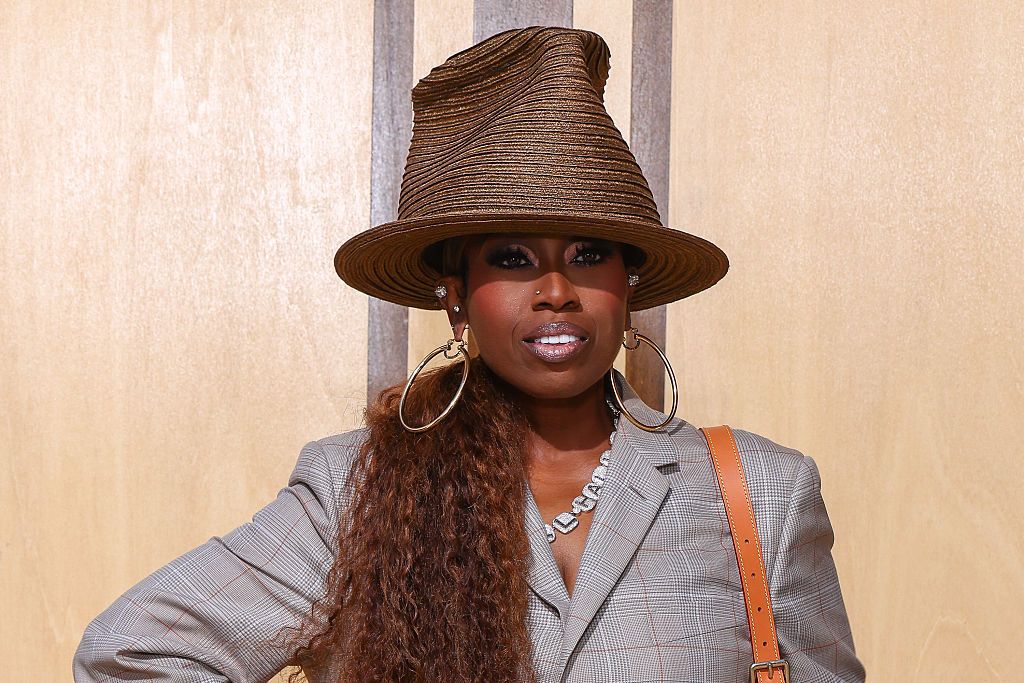
Nearly three decades ago, Missy—or Misdemeanor—arrived on the music scene as a solo artist with what is still considered one of the greatest lead singles in hip-hop history.
“The Rain (Supa Dupa Fly),” released in May 1997, was not just an auditory miracle; thanks to the artistry of Missy and her longtime collaborator, Timbaland, it was also a rebellion. In an industry that has long suffered from both colorist ideals and fatphobia, Missy’s declaration that she was “supa, dupa fly,” while being in a body often relegated to being behind the scenes, was both political and necessary. The visuals for the track opened the door to Missy reimagining what women emcees were able to be in videos. They could be, at once, sexy, entertaining, funny, and cool. Missy’s “trash bag couture” set off by fingerwaves and moody deep purple lipstick remains one of the most iconic looks in music video history.
Though “The Rain” showed the world that Missy was more than enough to stand on her own as an artist, she’d already mastered making people move by penning some of the most popular R&B songs in the early ’90s. Her work with the late great Aaliyah on 1996’s One In A Million etched her sound into the fabric of the genre, while her vivid storytelling and ability to make music out of the experiences, hurts, and pains of Black women made Missy the preferred pen of artists like Total, SWV, and Destiny’s Child.
“By the time I had done some [prominent] features, and Sylvia Rhone [then-CEO of Elektra Records] said, ‘We’ll give a label if you give us an album,'” Missy told Variety in 2021. “So I went to Tim and said “Let’s hurry up and do this album so they can give me my label,” and we finished [the million-plus-selling Supa Dupa Fly] in two weeks!”
Under her Goldmind Label imprint, Missy continued to prove herself a visionary not only for her own art but for artists looking to make a hit that would put them on the charts. Within the five years where she released her freshman, sophomore—1999’s The Real World—and junior (2001’s Miss E..So Addictive)—albums, the Virginia native also managed to write and produce a dozen hits for others, including the remake of Labelle’s “Lady Marmalade,” which went number one on the Billboard charts in 2001.
Missy continued her solo brilliance on Da Real World and Miss E…, blending new sounds and building a fresh audio landscape with every new track. She tackled topics like sexuality, heartbreak, independence, and feminism with expert precision while continuing to push the bounds of what hip hop could do. Songs like “All In My Grill” and “She’s a B***” gave new meaning to women’s empowerment, while “One Minute Man” and “Get Ur Freak On” further proved that she could never be boxed in, with the latter notching her a Grammy Award for Best Rap Solo Performance.
“Ms Elliott is one of the true geniuses of the form,” said The Economist of Missy in 2023. “She is to rap what Prince was to R’n’B, both in terms of her impact upon the genre and her ability to weave in styles and strands from outside it.”
By the 2002 release of her fourth studio album, Under Construction, Missy had cemented herself as one of the greatest visual storytellers in the industry, but she was only getting started.
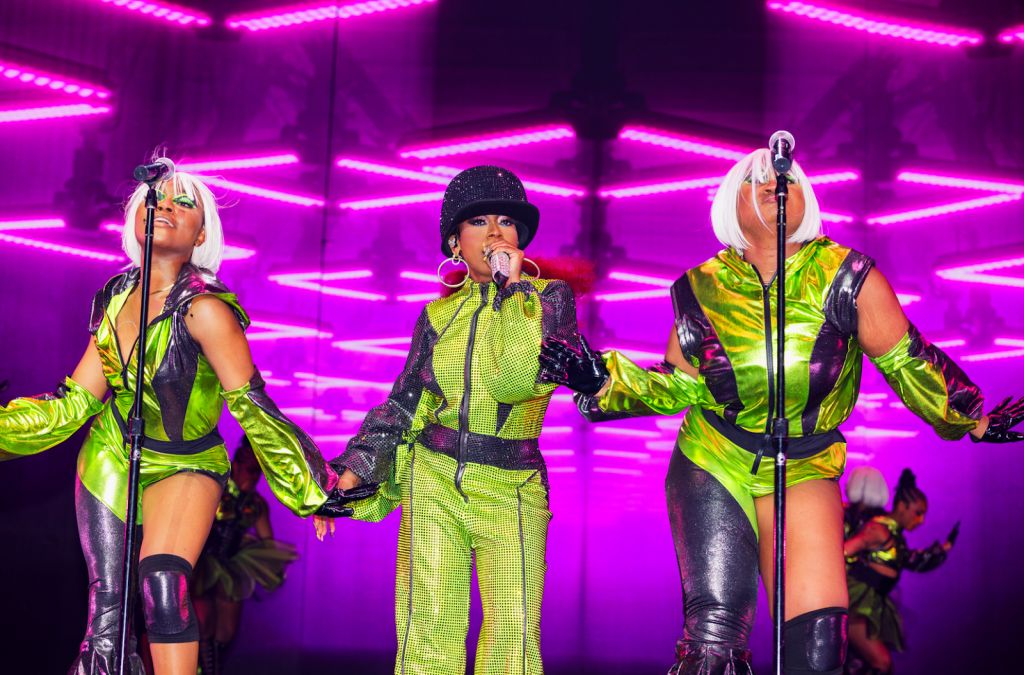
The lead single from the album, “Work It,” would send Missy mania into overdrive. The song debuted at No. 2 on the Billboard charts, and its accompanying visuals earned her the MTV Video Music Award honor of “Video of the Year.” “Work It”-s massive popularity may have endeared her to a bigger audience, but hip-hop had already caught on to what Missy was putting down.
Her flow, musicality, and lyricism, combined with raw vocals, a penchant for a ridiculously catchy hook, and an ear for finding fresh ways to approach sampling, helped Missy reach vanguard levels by the midway mark of the new millennium. She led the pack for female rapper record sales with eight million worldwide, and racked up Grammy nominations for both Album of the Year and Best Rap Album. Her video for “Gossip Folks,” the second single from Under Construction, broke viewing records on MTV, MTV2, and BET.
While much of hip-hop was following the blueprint set by ’90s luxury rap culture, Missy gave artists permission to push the envelope in the booth and in front of the camera.
“That was my favorite rapper and that would be why I was making so many sounds,” Lil Wayne said of Missy’s influence on his earlier records. “So the ‘Block Burner’ song was my best favorite song because my favorite artist was Missy Elliott.”
Though the iconic artist would later lament the pressure she felt to release her 2004 album, This Is A Test!, the project was still certified platinum, spurning out dance cuts like “Pass That Dutch” and “I’m Really Hot.” That same year, she helped newcomer Ciara continue her chart dominance by appearing on”1,2 Step,” the second single from her debut album Goodies. The track would earn them a Grammy nomination for Best Rap/Sung Collaboration.
After the success of 2005’s Cookbook, an album that saw her step away from her usual collaborators in search of a new sound, and the meteoric achievements of its lead single “Lose Control,” including a Grammy for Best Short Form Video, Missy took a well-deserved break from being one of the biggest rap acts in music. However, she didn’t leave the studio. Instead, she again turned to her writing and production talents to help other women find chart dominance.
And she did so in true Missy fashion. From 2005 to 2010, she churned out epic singles, including Keyshia Cole’s “Let It Go,” Jazmine Sullivan’s “Need U Bad,” Fantasia’s “Free Yourself,” and Monica’s “Everything To Me,” all of which were nominated for Grammys after reaching the top of the Billboard lists. Though never reaching the milestone herself, Missy has the Midas touch for helping other women reach No. 1, with many of them crediting her ability to be more than just a producer but also a sister.
“Missy is one of the greatest producers of our time, but to me she’s a sister first. I was learning everything that I needed to learn while working with her,” Monica told Fader in 2016. “When me and Missy are working on music, we’re not looking at times, clocks, and who said we should be in a certain place. We did things on our own terms and talked about life and what was happening. That’s what makes it special. Nobody was controlling it but us and our true emotions.”
Sound Waves: How Missy Elliott Became Hip-Hop’s Visual Vanguard, Put The Thing Down, Flipped It & Reversed It - Page 3 was originally published on bossip.com