Philadelphia’s Most Violence-Impacted Neighborhoods
- Some Philly neighborhoods bear disproportionate violent crime, but progress is being made
- Kensington, Fairhill, Nicetown-Tioga are among the most violence-impacted areas
- These neighborhoods have high poverty, drug activity, but also families, schools, and community
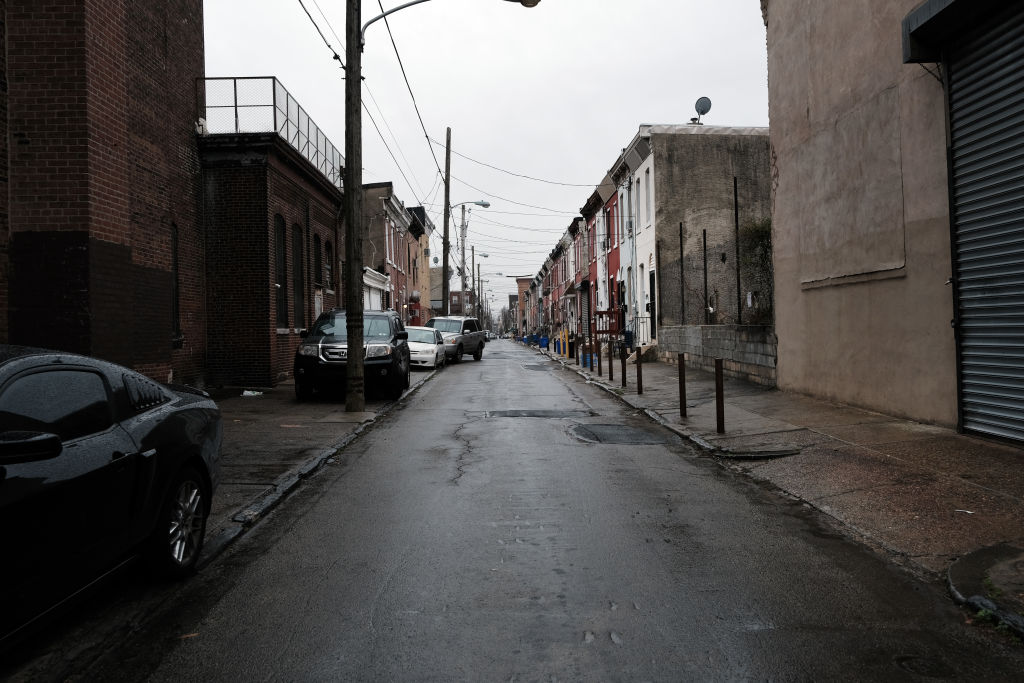
Philadelphia’s Most Violence-Impacted Neighborhoods: What the Data and Reporting Show
Any list of Philadelphia’s “most dangerous neighborhoods” needs a caution label the size of City Hall. Neighborhoods are not monoliths, conditions can vary block by block, and overall violence in Philadelphia has fallen sharply in the last two years. Still, official city data and reputable local reporting show that some places have borne a disproportionate share of shootings, homicides, and other violent crime for years.
RELATED: Top 10 Most Dangerous Schools in Philadelphia
As Police Commissioner Kevin Bethel put it, even amid citywide progress, “These same communities are still traumatized.”
Below is a data-informed list of Philadelphia neighborhoods or neighborhood clusters most often identified in official dashboards and credible local reporting as among the city’s most violence-impacted areas.
1. Kensington
Kensington remains one of the clearest answers to this question. The neighborhood has long been associated with high levels of shootings, narcotics activity, turf conflict, homelessness, and social disorder. The Inquirer reported that blocks near McPherson Square have had not only some of the highest rates of gun violence in Philadelphia, but among the highest concentrations of shootings in the country.
That said, there has also been notable improvement. The Inquirer found that gun violence in Kensington in early 2024 was down more than 70% compared with two years earlier. Later reporting described “signs of progress” in the neighborhood as enforcement and outreach efforts intensified.
2. Fairhill
Fairhill is often grouped with the eastern North Philadelphia corridor and repeatedly appears in reporting about the city’s most violent zones. The Inquirer included Fairhill among the neighborhoods surrounding core North Philadelphia where shootings had historically been heavily concentrated. The neighborhood’s proximity to major drug market activity and entrenched poverty has kept it vulnerable to recurring gun violence.
3. Nicetown–Tioga
Nicetown and Tioga have long had some of the highest shooting burdens in Philadelphia. The Inquirer reported that two years earlier, 38 people had been shot in Tioga and Nicetown in just the first five months of the year; by 2024, that number had dropped to eight, one of the steepest declines in the city.
That improvement is important, but it also underscores how severe the prior levels were. These neighborhoods are still commonly referenced in discussions of historically high gun violence in North Philadelphia.
4. Hunting Park
Hunting Park is another neighborhood repeatedly tied to elevated violence in North Philadelphia. It appears in neighborhood-group analyses by the Inquirer as part of the band of communities with very high shooting density. It also sits in an area with deep poverty, vacant properties, and long-term exposure to gun violence.
5. Strawberry Mansion
Strawberry Mansion has for years been one of the neighborhoods most associated with violent crime in Philadelphia. It lies within a broader North Philadelphia/Northwest edge area that has repeatedly experienced high rates of shootings and homicides. While recent articles focus more on citywide declines than neighborhood ranking tables, Strawberry Mansion continues to be widely recognized in local public-safety discussions as one of the communities most scarred by gun violence.
6. North Philadelphia, broadly defined
This is a broad geography rather than a single neighborhood, but it would be misleading to leave it out. The Inquirer described North Philadelphia as an area that “has long been one of its most violent,” noting that some blocks, particularly west of Broad Street, have seen perpetually high levels of shootings and that gunfire per square mile has long exceeded the citywide rate.
The paper also found that when surrounding neighborhoods were included — such as Fairhill, Hunting Park, and others — shootings in the first five months of 2024 had fallen 57% from the same period in 2022. That is good news, but it still reflects an area that began from an extremely high baseline.
7. Parkside
Parkside belongs on this list because local reporting explicitly identified it as the most gun-violent neighborhood in West Philadelphia, even as that gap narrowed. Through May 2024, the Inquirer reported that 21 people had been shot there, a 65% decline from the prior year and the lowest year-to-date tally since at least 2015.
That is a significant drop, but the neighborhood’s inclusion in repeated analyses shows that Parkside has had a sustained, outsized exposure to shootings relative to its size.
8. Mantua
Mantua is often discussed alongside Parkside when West Philadelphia violence is mapped. The Inquirer reported that Mantua also saw a steep decline in shootings per square mile, around 25% off its peak. Again, the decline is meaningful, but it reflects a neighborhood that had been dealing with very high shooting intensity.
The bigger picture
A responsible reading of the data is this: Philadelphia is safer than it was at the height of the pandemic-era violence surge. The Philadelphia Police Department reports homicides citywide are down sharply in 2026 year to date, and violent crime overall is down as well. The City Controller’s gun violence map likewise shows a major decline in fatal and nonfatal shooting victims compared with recent years.
But officials and researchers have been careful not to over-celebrate. “The numbers don’t mean that the work is done,” city public safety director Adam Geer told the Inquirer. Mayor Cherelle Parker has made a similar point, saying, “Every shooting and homicide in Philadelphia personally pains me … These are human beings that we are talking about, and not statistics.”
That is probably the fairest conclusion. If you are asking where violence has been most concentrated, the strongest evidence points to Kensington, Fairhill, Nicetown–Tioga, Hunting Park, Strawberry Mansion, broader North Philadelphia, Parkside, and Mantua. But if you are asking whether those neighborhoods are defined only by danger, the answer is no. They are also communities of families, churches, schools, block captains, and residents who have contributed far more than their share of the city’s trauma.