Canadian Wildfire Smoke Heat Covers Philadelphia Region
Canadian Wildfire Smoke, Extreme Heat Blanket Philadelphia Region
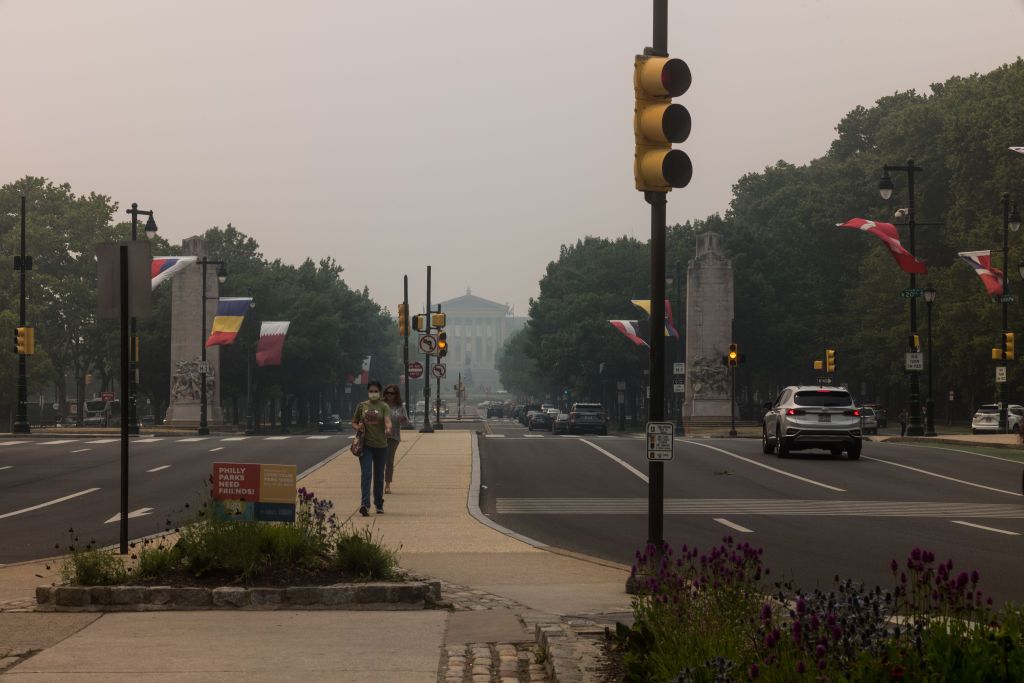
Extreme heat and drifting wildfire smoke from Canada created a dangerous combination across southeastern Pennsylvania on Wednesday, prompting health officials to urge residents to limit time outdoors.
Forecasters expect temperatures to climb into the 90s while humidity pushes heat index values close to 100 degrees. At the same time, smoke from ongoing Canadian wildfires continues to move into the Philadelphia region, reducing air quality and increasing health risks for millions of people.
The National Weather Service and local meteorologists warned that the smoky conditions could linger through Thursday as shifting winds carry fine particles into southeastern Pennsylvania, South Jersey, and Delaware. Officials also issued air quality alerts because the smoke contains tiny PM2.5 particles that can travel deep into the lungs.
Health experts encouraged residents, especially children, older adults, pregnant people, and anyone with asthma or heart disease, to avoid strenuous outdoor activities during the worst conditions. They also recommended keeping windows closed, running air conditioning on recirculate when possible, and using high-quality air filters indoors. Anyone who must spend extended time outside should consider wearing a well-fitting N95 mask to reduce smoke exposure.
The smoky skies arrive as a powerful heat wave grips much of the eastern United States. Heat alone can place significant stress on the body, but smoke exposure can make breathing even more difficult and increase the risk of respiratory and cardiovascular problems. Together, the two hazards create an even greater threat for vulnerable residents.
Officials urged residents to stay hydrated, check on neighbors and family members, and monitor local forecasts for changing air quality conditions. They also advised people to watch for symptoms such as dizziness, chest pain, difficulty breathing, or heat exhaustion and seek medical attention if symptoms worsen.
Forecasters expect conditions to improve once winds shift and move the wildfire smoke away from the Philadelphia region later this week, although additional smoke could return if Canadian wildfires remain active.